
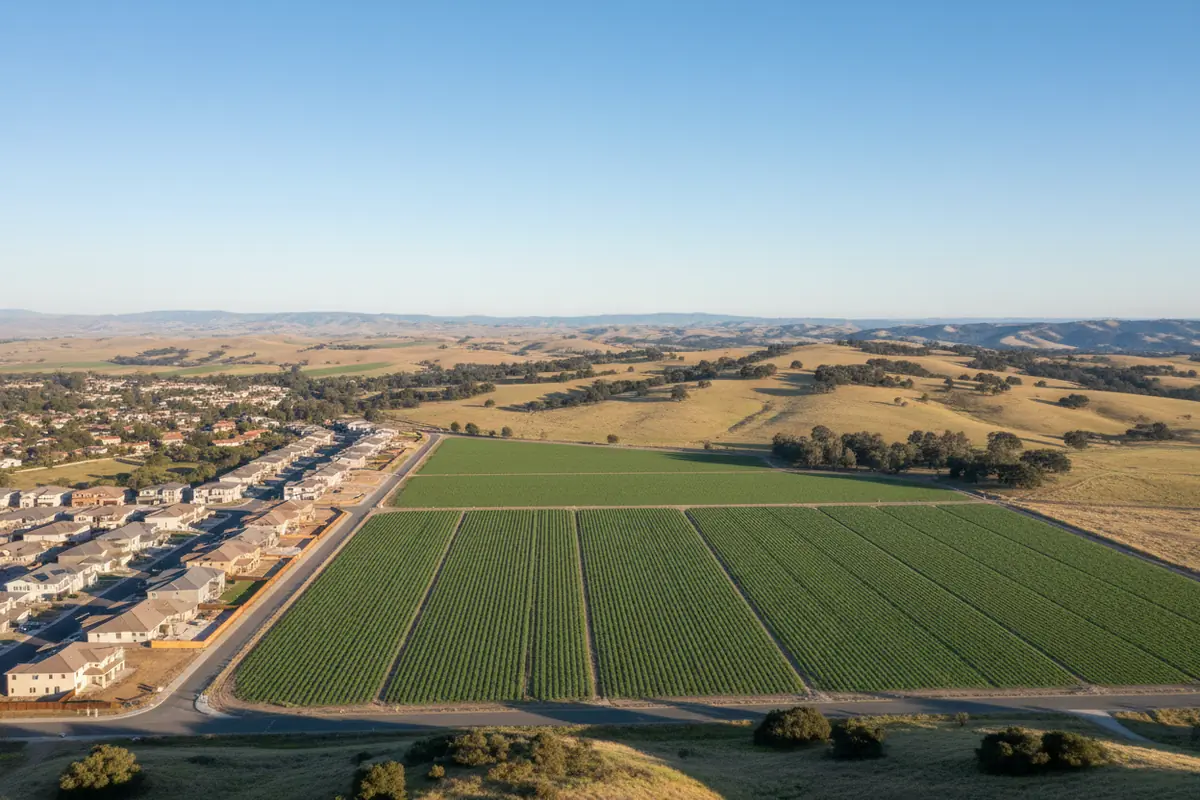
California land is usually bought by one of five kinds of buyers: an adjoining neighbor, a builder or developer, a farmer or rancher, an investor, or a conservation organization. Each one checks something different first, such as the boundary, legal parcel status, a Williamson Act contract, environmental history or conservation value. That is why the same parcel can draw very different interest.
An owner of a vacant lot, a ranch, a stretch of farmland, timber or hunting ground who is thinking about selling usually wants to know who will actually be interested and what those buyers will ask. The parcel's access, zoning and current use shape both answers, and a buyer will check each one. This guide walks through each buyer type and the California rules that shape what that buyer checks.