Skip to content
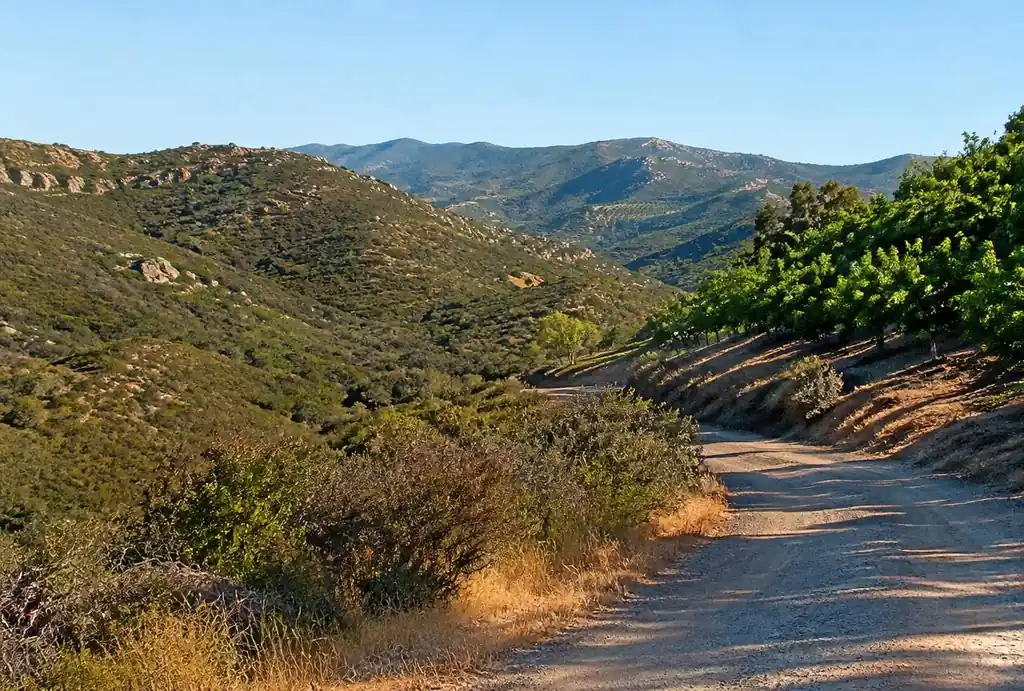
San Diego County backcountry hills with an avocado grove beside a ranch road

Sell Land in San Diego County, CA

Updated November 21, 2026

Explore Selling Options
State
California
County
San Diego
Coverage
Questionnaire accepts parcels here
Parent market
California
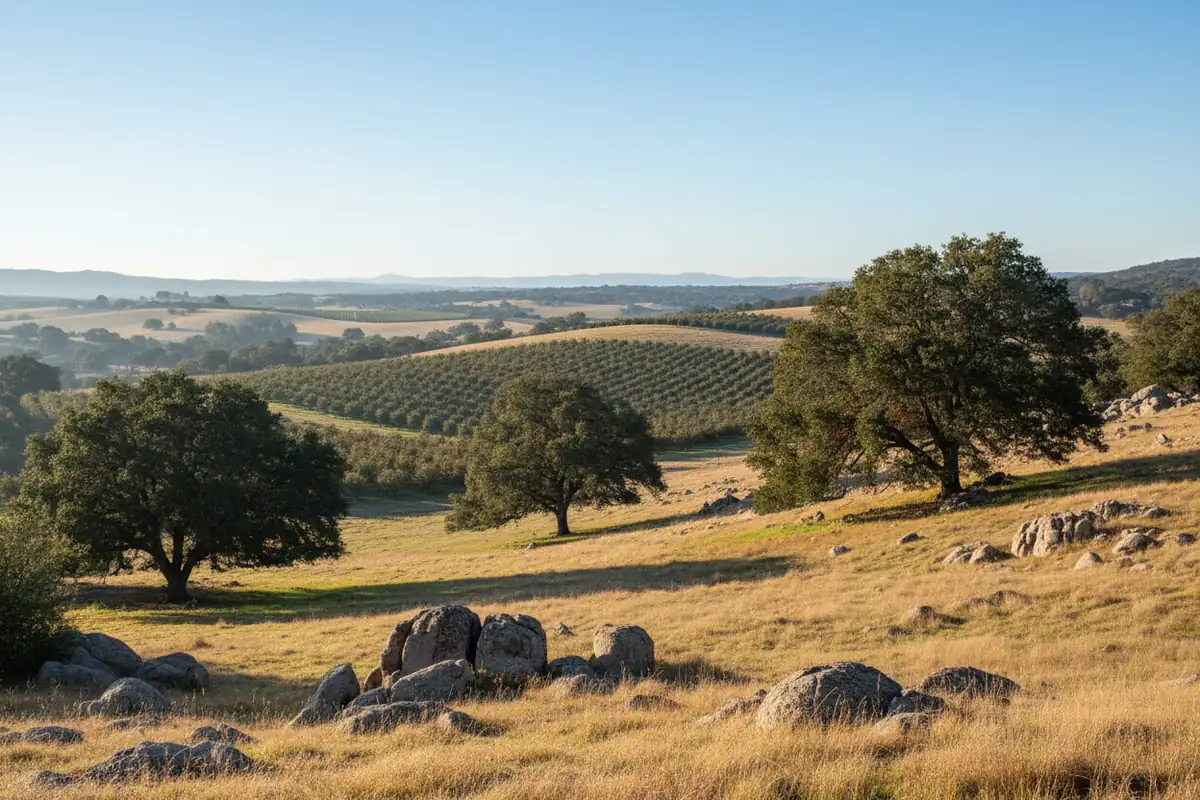
Oak meadows and granite boulders across backcountry San Diego County ranchland.
Immediate local answer

Selling land in San Diego County: how a certificate of compliance confirms parcel status, the $0.55 per $500 transfer tax, and who files the change in ownership.

On this page
  1. San Diego County Land: A Local Snapshot
  2. Common Situations Owners Face When Selling Land Here
  3. Local Offices and Records: Where San Diego County Land Transactions Are Recorded
  4. What Are Your Options for Selling Land in San Diego County?
  5. Local Costs and Timing: Documentary Transfer Tax and What to Expect at Closing
  6. Frequently asked questions
  7. Sources

Land in San Diego County can be sold by listing it with a real estate agent, selling it yourself, or selling directly to a buyer who takes it as it is. Each path follows the same steps. The parcel's legal status, access and zoning shape who will buy. The County Recorder records the deed and collects the documentary transfer tax, and the buyer files a change in ownership statement.

If you are getting ready to sell land here, whether you live down the road or manage the parcel from elsewhere in the state, the question in front of you is usually the same: what will a buyer look at before agreeing to a price, and how much of that can be answered ahead of time? Much of it comes from a few county offices: the Assessor/Recorder/County Clerk, the Treasurer-Tax Collector, and San Diego County Planning & Development Services, which administers zoning and land use. The rules below are California statutes, the same in every county. What is local is how San Diego County's offices describe their own part.

San Diego County Land: A Local Snapshot

Land in the county runs from backcountry acreage, citrus and avocado groves and ranch land to hillside and canyon parcels, desert-edge land and parcels near the coast. Each type draws a different buyer, and each buyer starts with different questions.

Two of those questions come up across the county:

  • Fire hazard severity zone. A buyer will check how the parcel is designated, because the designation can bear on building, insurance and use.
  • Water service. A buyer will check whether a water district serves the parcel or whether it relies on a well. Water rights are a separate legal subject. An attorney reviews them for a particular parcel.

Value here is driven by things a buyer can confirm on paper and on the ground. These include legal parcel status, recorded access, what the zoning allows, utilities and water, terrain, and hazard designations. A parcel with clear answers on each of these reaches more buyers than one with open questions. No figure on this page sets a value; an appraiser does that for a specific parcel.

Common Situations Owners Face When Selling Land Here

An inherited or co-owned parcel. Who can sign the deed depends on how title is held: a trust, a probate estate, joint tenancy, or co-owners holding shares. If co-owners disagree or a case has been filed, the matter is contested. That is a different subject, and an attorney handles it.

A parcel under a Williamson Act contract. This is an agreement that keeps land in agricultural use in exchange for property tax treatment. A buyer will ask whether the parcel is enrolled, because enrollment affects what the buyer can do with it and how quickly any change of use can happen. An attorney reviews the contract's effect on a sale.

Access and easements. A buyer, the buyer's lender and the title company will each ask whether the parcel reaches a road legally. A parcel can reach a road through frontage on a public road or through a recorded easement, which is a recorded right to cross someone else's land. Backcountry parcels reached by a long private road raise this question first.

A parcel created long ago. Older divisions of land sometimes leave doubt about whether a parcel was lawfully created under the Subdivision Map Act. That state law governs how land is divided. There is a formal way to settle that doubt, described below.

How any of these comes out depends on the parcel's facts and the law that applies to them.

Local Offices and Records: Where San Diego County Land Transactions Are Recorded

The County Recorder is part of the San Diego County Assessor/Recorder/County Clerk. Its Recording page says it will take a document that California law says must be recorded, as long as the fees and taxes are paid, the document has all the needed information, and it can be photographically reproduced. The same page says several more things a seller of land will meet:

  • The Assessor's Parcel Number is required on deeds by local ordinance.
  • The documentary transfer tax is collected at the time of recording for each deed.
  • Effective December 9, 2024, searching by Assessor's Parcel Number is no longer available in the online Official Record Search. Records can be searched by the name of the grantor or grantee, meaning the party transferring or receiving the property.
  • Documents can be recorded in person at office locations that include downtown San Diego, Chula Vista and Santee, but not at the Kearny Mesa office.
  • State law prevents the Recorder from helping or advising in making legal documents, and the office does not offer notary services.

For an owner, this means a deed that is complete and correctly prepared is a seller's job. The Recorder's role is to record it.

The Assessor receives the change in ownership statement the buyer files, and the property is reassessed after a sale.

The Treasurer-Tax Collector collects property tax on land. Its Secured Property Taxes page says "secured" property includes land, and that property is reassessed whenever it changes owners. It also says secured taxes are due in two installments. The first is due November 1 and is penalized if not paid by December 10. The second is due February 1 and is penalized if not paid by April 10. For a seller, those installment dates are what escrow works from when it divides the year's tax between seller and buyer.

Parcel status. Under Government Code section 66499.35, any person owning real property, or a buyer under a contract of sale, may request that the local agency determine whether the property complies with the Subdivision Map Act and local ordinances under it. The local agency must make that determination. If the property complies, the city or county records a certificate of compliance with the county recorder, and the agency may charge a reasonable fee to cover issuing and recording it. If the property does not comply, the agency issues a conditional certificate of compliance. The conditions must be met before a later permit or approval for development is issued, and not until then. A recorded final map, parcel map, official map or approved certificate of exception also counts as a certificate of compliance for the parcels it describes. Each certificate states that the parcel may be sold, leased or financed without further compliance with the Subdivision Map Act. For a seller, a certificate of compliance answers the parcel-status question before a buyer's title company raises it.

What Are Your Options for Selling Land in San Diego County?

Listing with a real estate agent. This reaches the widest pool of buyers. It involves a commission, showings or site visits, and often a buyer who depends on a loan. Lenders look closely at access and parcel status on raw land.

Selling without an agent. The owner handles pricing, marketing, negotiation and paperwork. A title company or an escrow holder typically manages the closing, and an attorney can prepare or review the contract.

Selling directly to a buyer who pays cash and takes the parcel as it is. A direct offer is often lower than what the same parcel might bring on the open market. The buyer is pricing in what it cannot yet confirm, such as access, water or parcel status, along with the cost of holding and reselling the land. What the seller gets in exchange is less preparation, fewer site visits and no wait on a buyer's lender. "As-is" describes the condition the buyer accepts. It does not change the deed, the transfer tax, the buyer's change in ownership filing, or any lien that must be paid at closing. Those steps are the same whoever the buyer is.

Comparing written offers side by side, along with the estimated net proceeds of each, is how an owner sees which path fits. Net proceeds are the price less commissions, carrying costs, loan payoffs and closing costs.

Local Costs and Timing: Documentary Transfer Tax and What to Expect at Closing

Documentary transfer tax. Under Rev. & Tax. Code section 11911, a county board of supervisors may impose a tax on each deed conveying realty sold within the county when the consideration or value exceeds $100. The value counted excludes any lien or encumbrance remaining on the property at the time of sale. The rate is $0.55 for each $500 or fractional part. A city within such a county may impose a tax at one-half that rate, and the county allows a credit for the city tax. The Recorder's page states the same $0.55 per $500 rate and says the tax is collected at recording. In practice, this is a line item on the closing statement, computed from the price. Who pays it is a term the contract sets.

Change in ownership statement. Under Rev. & Tax. Code section 480, the transferee, meaning the buyer, files a signed change in ownership statement in the county where the property is located. It is filed with the recorder at the time the deed is recorded. If the transfer is not recorded, or is recorded without the statement, it is filed with the assessor no later than 90 days after the change in ownership. For a transfer by reason of death, the deadline is no later than 150 days after the date of death or, if the estate is probated, when the inventory and appraisal is filed. A failure to file no later than 90 days after the assessor mails a written request carries a penalty if the failure was not willful. The penalty is $100 or 10 percent of the taxes on the new base year value, whichever is greater. It is capped at $5,000 if the property is eligible for the homeowners' exemption, or $20,000 if it is not. Separately, the Recorder's page says a Preliminary Change of Ownership Report is required when transferring property and that an additional $20 recording fee may be charged if it is not submitted. These are the buyer's filings, but they matter to a seller because escrow will expect them with the deed.

At closing, escrow typically divides the current year's property tax between seller and buyer. Any loan or lien recorded against the parcel is paid from the proceeds. Tax questions about a sale go to a CPA, an enrolled agent or a tax attorney. Property tax questions go to the Assessor's or Tax Collector's office.

Many owners start by gathering the deed they hold, any recorded easement for the access road, and any certificate of compliance or recorded map for the parcel. With those in hand, the open question becomes whether the parcel's status has ever been formally determined.

Seller questionnaire

Curious what your options are? Start with six short questions.

Answer six short questions about your land — type, acreage, location, access, timeline — to explore your selling options.

Seller guides

  1. Understand value

    Access, water, soils, zoning and entitlements shape what buyers will pay.

  2. Match the right buyer

    A ranch buyer and a homebuilder value the same acres differently.

  3. Local context

    County rules matter. See our California and San Diego County guides.

Explore Selling Options
What type of land are you selling?
Approximately how many acres?

Where is the property?

How is the property accessed?
Utilities available (select all that apply)
When would you like to sell?

How can we reach you?

See our Privacy Policy and Terms.

Testimonials

The parcel had access questions and no utilities. I appreciated an offer that accounted for that.

M.K., Minneapolis, MN

Explore your selling options

Answer a few questions about your parcel.

Start the questionnaire

Helpful to have on hand

  • Assessor parcel number (APN)
  • Deed or title information
  • Most recent property tax bill
  • Any survey, plat or boundary map
  • Lease, easement or water documents

Frequently asked questions

What is a legal parcel determination, and does a San Diego County land owner need one before selling?

It is the local agency's decision on whether a parcel complies with the Subdivision Map Act, recorded as a certificate of compliance or a conditional one. Requesting one is optional. A buyer under a contract of sale can also request it, so the question can come up during escrow.

What is the documentary transfer tax in San Diego County?

It is a tax on the deed, collected by the County Recorder when the deed is recorded. Rev. & Tax. Code section 11911 sets the county rate at $0.55 per $500 of value, excluding liens that remain on the property. If no tax is due, the Recorder's page says to enter "0" and state the exemption on the document.

Who files the change in ownership statement when land is sold in San Diego County?

The buyer does, as the transferee. In a sale through escrow, the statement usually accompanies the deed when it is recorded. If the buyer is a corporation or LLC, Rev. & Tax. Code section 480 says an officer, manager or designated agent signs it.

Does a Williamson Act contract affect a land sale in San Diego County?

It can. Enrollment shapes what a buyer can do with the land and how quickly use can change. That is why a buyer will check for a contract early. An attorney reviews what the contract means for a particular sale.

How does road access affect selling land in San Diego County?

Access decides who can finance and build. A lender and a title company want frontage on a public road or a recorded easement. Because online parcel-number searches ended in December 2024, finding a recorded easement now means searching by party name or using a Recorder kiosk.

Can land in San Diego County be sold without a real estate agent?

Yes. An owner may sell land without an agent. The transfer tax, the buyer's change in ownership filing and payoff of recorded liens apply in the same way. The seller then carries the work an agent would otherwise do, including setting terms and preparing documents for escrow.