
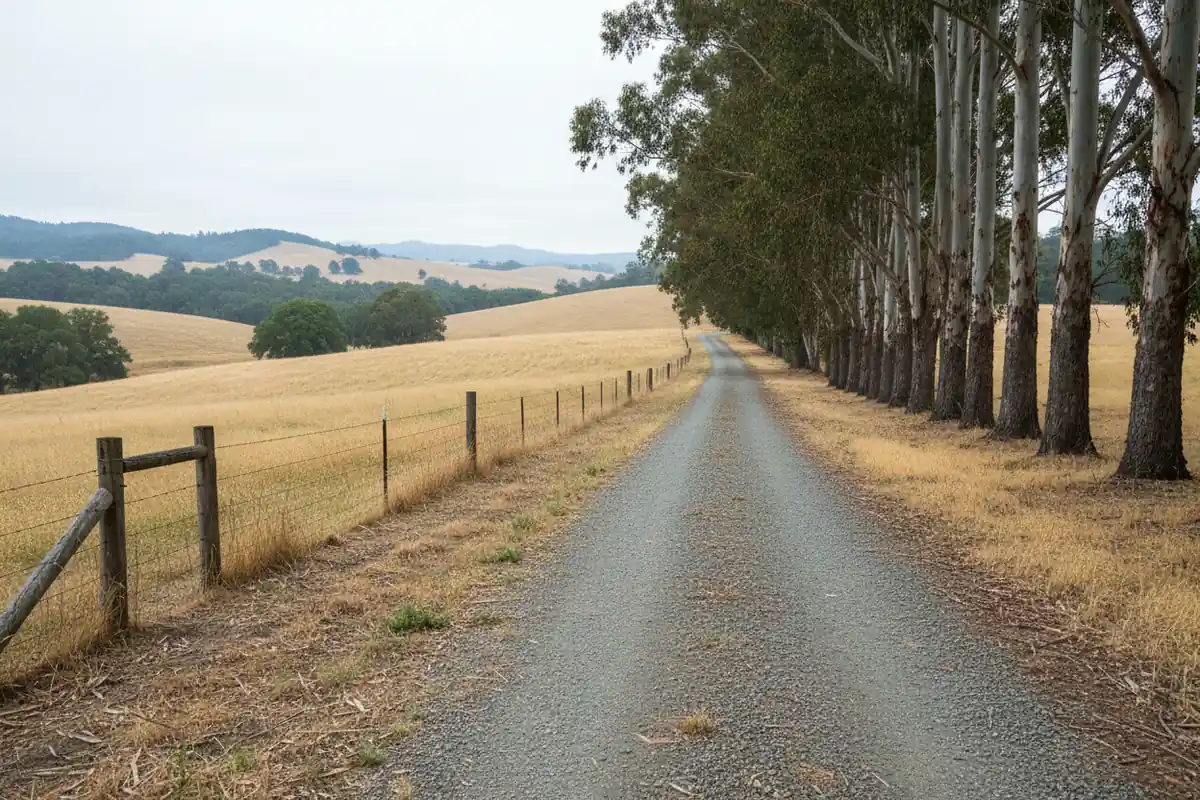
An easement on California land does not stop a sale. It travels with the parcel to the buyer, and its reach is set by the written grant or by the use that created it. A buyer will read about it in the preliminary title report and ask what it allows, who keeps up any shared road, and how it affects the parcel's use.
You own vacant land, farmland, a ranch, timber, recreational acreage or a development parcel in California, and you are getting ready to sell. Somewhere in the deed or the title papers there is a line about a road, a utility line, a water right or a conservation restriction, and you want to know what it means before a buyer asks. Those questions shape how a buyer sees the parcel's access, its usable acreage and what it can become.