
Skip to content

California

Selling an Avocado or Citrus Grove

Updated November 21, 2026

Explore Selling Options
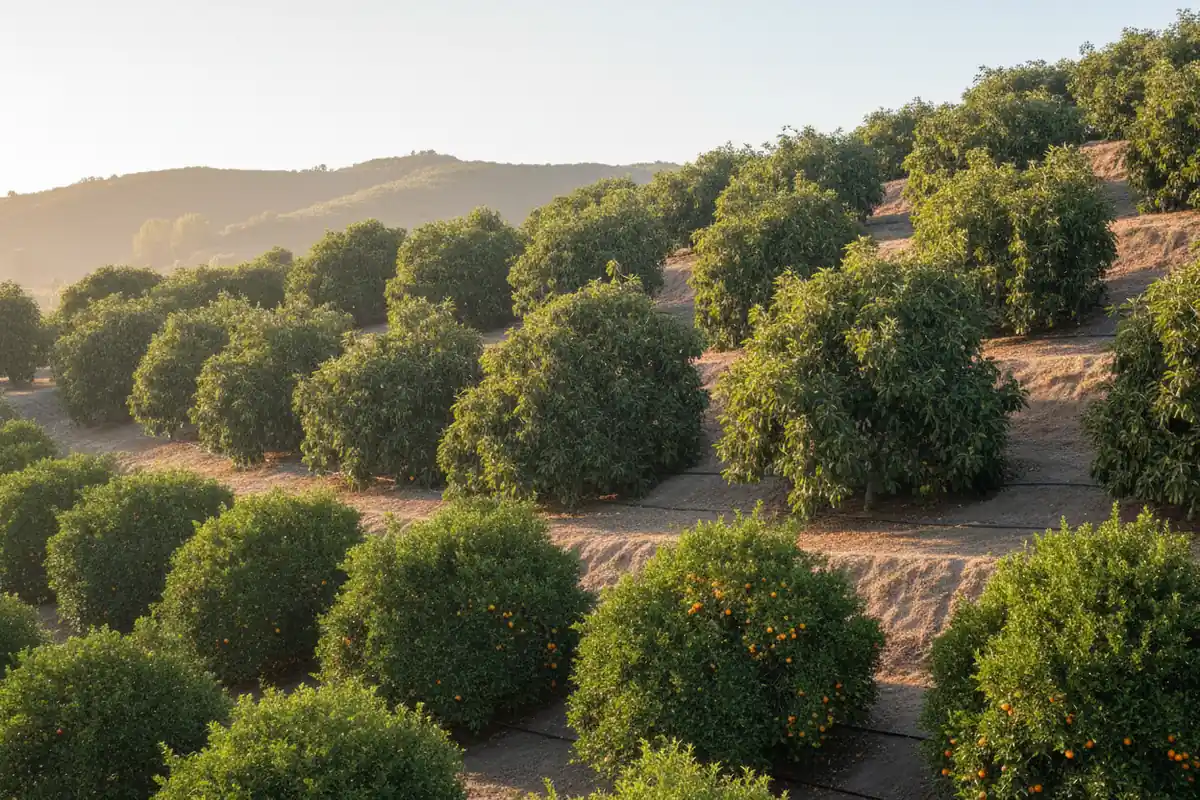
Terraced avocado trees above citrus rows, a working grove on a Ventura County hillside.
Immediate answer

Selling a California avocado or citrus grove: how a Williamson Act contract binds the buyer, which easements pass with the deed, and how legal parcel status is confirmed.

On this page
  1. What Buyers of Groves Ask About
  2. A Williamson Act Contract Binds the Buyer
  3. Easements That Pass With the Land
  4. Water Rights and Water District Service
  5. Legal Parcel Status and the Subdivision Map Act
  6. Selling a Grove as a Home Site
  7. Options and Trade-offs
  8. Disclosures a Grove Seller Owes
  9. Mistakes to Avoid
  10. What to Do Next
  11. Frequently asked questions
  12. Sources

A California avocado or citrus grove sells mostly on what the land carries with it, not the trees alone. Buyers check the water source, tree age and records, slope, road access and any Williamson Act contract. They also check the easements that pass with the deed, legal lot status and, for a home site, whether the parcel can take a septic system.

If you own a grove on a hillside in San Diego, Ventura or Riverside County, you may be weighing a sale right now. Perhaps the orchard was inherited, the trees are aging, or the water bills have become hard to carry. Most owners in that position want to know what a buyer will ask before any listing or conversation starts. This guide walks through those questions: California's land conservation contracts, easements, water, legal parcel status and the extra steps when a buyer wants to build a house.

What Buyers of Groves Ask About

A grove buyer's first questions are practical ones, and each of them affects what the land is worth.

  • Water district rates and meters. Buyers check whether the parcel has a metered connection to a water district or relies on a well or a private water right. They also check whether the meter is large enough to irrigate a grove.
  • Tree age and production records. The age of the trees and any harvest or yield records tell a buyer how much productive life the grove has left.
  • Slope and access. Buyers look at the grade, the road into the parcel, and whether that access rests on a recorded easement or a private arrangement.
  • A home site. Some buyers see the grove as a place to build a house. That raises different questions than continued farming.

Put simply, reliable water, productive trees, workable slope and legal access tend to support a stronger sale. Where any of those is uncertain, the buyer is taking on risk, and the price usually reflects it.

A Williamson Act Contract Binds the Buyer

A Williamson Act contract stays with the land when the grove is sold. The California Department of Conservation's Williamson Act Program page describes the Act, also called the California Land Conservation Act of 1965. It lets local governments contract with private landowners to restrict specific parcels to agricultural or related open space use. In return, the landowner receives property tax assessments that are much lower than normal, because they are based on farming and open space uses instead of full market value.

Government Code section 51243 says every contract shall "provide for the exclusion of uses other than agricultural, and other than those compatible with agricultural uses, for the duration of the contract" and shall "be binding upon, and inure to the benefit of, all successors in interest of the owner." A successor in interest is anyone who takes the owner's place in the land, including a buyer. The same section provides that when land under contract is divided, the owner of each parcel may act on the contract's rights on their own. Those rights include giving notice of nonrenewal and petitioning for cancellation.

For a seller, this means the buyer takes on the use restrictions and the remaining term of the contract. A buyer will want to see the contract and know how many years are left on it. Nonrenewal and cancellation each follow their own procedures, which this article does not cover in detail. The Department's page also notes that participating counties and cities set their own rules, including allowable and compatible uses, so the county's rules matter as much as the statute.

Easements That Pass With the Land

An easement is a right to use someone else's land for a specific purpose, such as a road or a pipeline. Civil Code section 1104 states that "a transfer of real property passes all easements attached thereto." It also creates an easement to use the seller's other land "in the same manner and to the same extent as such property was obviously and permanently used" for the benefit of the transferred property when the transfer was agreed on or completed.

In plain terms, the access road, water-delivery lines and utility routes that serve the grove generally go with the deed. A use the seller made openly and permanently across their own adjoining land can also carry over. Easements that burden the grove, meaning someone else's rights across it, remain in place as well.

A buyer will read the title report for recorded easements. Arrangements that were never recorded, such as a neighbor's informal use of a pipeline, are facts the seller knows and the buyer may not. Knowing which easements are recorded and which are informal helps an owner answer questions accurately before a sale begins.

Water Rights and Water District Service

Water is often the first thing a grove buyer prices in. With a district connection, the buyer checks the meter, the rates the district charges, and whether the service can support irrigation. With a well or a surface diversion, the buyer wants documentation, which can include well logs, pump tests, or a water right permit or license.

The State Water Resources Control Board's Water Rights FAQs say that anyone who takes water from a lake, river, stream or creek, or from underground supplies, for a beneficial use needs a water right under the California Water Code. The Board's page adds several points:

  • An owner may hold a riparian or pre-1914 appropriative right even without a state permit.
  • A groundwater right comes from extracting water and putting it to beneficial use. Use on land over the basin is an "overlying" right.
  • Riparian, prescriptive and pre-1914 rights "can only be confirmed by the courts."
  • Water rights are not looked up by Assessor's Parcel Number.

For a seller, a claimed right with no decree or recorded filing behind it is harder for a buyer to rely on. Whether a particular right exists and transfers is a question for a water rights attorney or the State Water Board.

A legal parcel is one created in compliance with the Subdivision Map Act, California's law on dividing land. A grove that was split off informally may not be a lot that can be separately sold or financed. A buyer's lender and title insurer will check.

Government Code section 66499.35 lets any owner, or a buyer under a contract of sale, ask the local agency to determine whether the property complies with the Act and the local ordinances adopted under it. The section sets out these outcomes:

  • If the property complies, the city or county records a certificate of compliance with the county recorder.
  • If it does not comply, the agency issues a conditional certificate of compliance. Its conditions must be met before a later permit or other approval for development is issued, and not before then.
  • A recorded final map, parcel map, official map or approved certificate of exception counts as a certificate of compliance for the parcels it describes.

The agency may charge a reasonable fee to cover issuing and recording the certificate. Each certificate must carry a notice that the parcel "may be sold, leased, or financed without further compliance with the Subdivision Map Act," while development may still need permits.

Confirming legal parcel status before marketing helps an owner avoid a title problem in the middle of escrow.

Selling a Grove as a Home Site

When a buyer's goal is a house rather than a harvest, the checklist changes. Three questions lead it.

Zoning. The county's general plan and zoning set whether a residence is allowed. Agricultural zoning may call for a use permit or a rezoning. A Williamson Act contract adds its own limits on use.

Septic feasibility. A rural home site needs an on-site wastewater system. The County of San Diego's Frequently Asked Questions on Septic Systems is one county's example of the rules. It says all designs there must meet the Regional Water Quality Control Board's requirement of at least 5 feet between anticipated high groundwater and the bottom of the disposal system. Supplemental treatment systems can reduce that separation to 2 feet. The page says the county keeps records of septic systems installed since the late 1970s, filed by tax assessor parcel number. It also says residential disposal fields are sized from percolation test data and the number of bedrooms. Other counties set their own standards.

Access. A home needs legal vehicular access. An easement wide enough for grove equipment may not meet county road standards for a residence.

An owner who has the parcel's zoning designation and any septic records on hand is ready when a buyer asks for them.

Options and Trade-offs

There is more than one way to sell a grove, and the right one depends on what you want to trade off: price, speed, effort or ongoing risk.

If you list with a real estate agent, your grove reaches the open market, including buyers looking for working orchards and buyers looking for home sites. You pay a commission, and the sale depends on the buyer's financing, inspections and review of water and title.

If you sell directly to a buyer who pays cash and takes the land as it is, you can usually expect less preparation, fewer showings and less dependence on a buyer's loan. The trade-off is that a direct offer is often lower than an open-market price, because that buyer takes on the unresolved questions about water, access or parcel status, along with the risk and the cost of reselling. Your disclosure duties stay the same whoever the buyer is.

If you carry back financing, you act as the lender and receive payments over time. That can give you a steady income stream, but it also keeps you tied to the property and to the buyer's ability to keep paying.

Many owners compare written offers by estimated net proceeds: the price less commissions, any repairs, carrying costs, loan payoffs and closing costs. Tax consequences of a sale, including whether an exchange into other property is available, are a separate question for a tax professional and fall outside this article. Which path fits depends on the facts of your parcel and the law that applies to it.

Disclosures a Grove Seller Owes

A seller's disclosures cover what the seller knows that a buyer could not easily find out. For a grove, that list commonly includes:

  • the Williamson Act contract and its remaining term
  • recorded easements and any informal use arrangements
  • the water source and any claimed water rights
  • conditions the seller knows about that affect the trees' productivity

California law also generally requires sellers to disclose whether a property lies in certain state-designated natural hazard zones. A buyer who learns of a Williamson Act contract only after closing may have a claim against the seller.

Which disclosures apply to a particular sale depends on the facts. A real estate attorney can review a seller's specific obligations.

Mistakes to Avoid

Most grove sales that stall do so over paperwork, not over the orchard itself. A few patterns come up again and again.

  • The contract can't be found. If you can't put your hands on the Williamson Act contract, the buyer's due diligence slows down while a copy is tracked down. And if the buyer learns of the contract late, they may renegotiate or walk away.
  • An informal water deal is assumed to carry over. A handshake water-sharing arrangement is not a recorded easement. Whether it passes under Civil Code section 1104 depends on how the water was used and over whose land.
  • Parcel status is left for later. If your lot cannot be separately conveyed, the sale cannot close.
  • The septic question comes up late. When your buyer wants a home site, county records and percolation testing take time, and starting late can push back the closing.

What to Do Next

The records that answer a buyer's questions are often already on file somewhere. Gathering them early gives a clearer picture of the parcel before any decision is made.

The usual starting points are these. The Williamson Act contract is on file with the county. A preliminary title report shows recorded easements. The city or county planning office handles legal parcel status, and a certificate of compliance or a recorded parcel map may already exist. The Department of Conservation's Enrollment Finder, mentioned on its Williamson Act page, is one place to check whether the parcel is enrolled.

Seller questionnaire

Curious what your options are? Start with six short questions.

Answer six short questions about your land — type, acreage, location, access, timeline — to explore your selling options.

Seller guides

  1. Understand value

    Access, water, soils, zoning and entitlements shape what buyers will pay.

  2. Match the right buyer

    A ranch buyer and a homebuilder value the same acres differently.

  3. Local context

    County rules matter. See our California and San Diego County guides.

Explore Selling Options
What type of land are you selling?
Approximately how many acres?

Where is the property?

How is the property accessed?
Utilities available (select all that apply)
When would you like to sell?

How can we reach you?

See our Privacy Policy and Terms.

Testimonials

The parcel had access questions and no utilities. I appreciated an offer that accounted for that.

M.K., Minneapolis, MN

Explore your selling options

Answer a few questions about your parcel.

Start the questionnaire

Frequently asked questions

Does a Williamson Act contract end when the grove is sold?

No. Under Government Code section 51243, the contract binds all successors in interest of the owner, so the buyer steps into it. A sale does not end a contract; nonrenewal and cancellation are separate procedures.

Do easements on a grove transfer to the buyer automatically?

Easements attached to the land generally pass with the deed under Civil Code section 1104. The title report shows the recorded ones. An unrecorded arrangement is harder for a buyer to confirm, which is why the seller's knowledge of it matters in the disclosures.

What records does a buyer of a grove typically ask for?

Buyers commonly ask for the Williamson Act contract, water district bills or well logs, tree age and production records, the title report, and septic records if a home site is the goal. Organized records let a buyer price in less uncertainty.

Can a grove be sold as a home site?

Often it can. The deciding factors are zoning, septic feasibility and access that meets county road standards, and any Williamson Act contract can narrow what zoning alone would allow.

What is legal parcel status and why does it matter for a grove sale?

It means the lot was created in compliance with the Subdivision Map Act. Government Code section 66499.35 lets an owner, or a buyer under contract, request a determination from the local agency. A conditional certificate can still allow a sale, with its conditions tied to later development.

What disclosures does a grove seller owe a buyer?

A seller discloses material facts a buyer cannot easily discover. For a grove, these commonly include the contract, easements, water arrangements, hazard zone status and known problems with the trees. A real estate attorney can say which specific duties apply to a given sale.

What is the difference between riparian water rights and a water district connection for a grove?

A district connection is metered service the district supplies, with its own rates. A riparian right is a private right that, according to the State Water Board, only a court can confirm. A water rights attorney or the State Water Board answers questions about a specific parcel.