
Skip to content

California

Selling Commercial Land

Updated November 21, 2026

Explore Selling Options
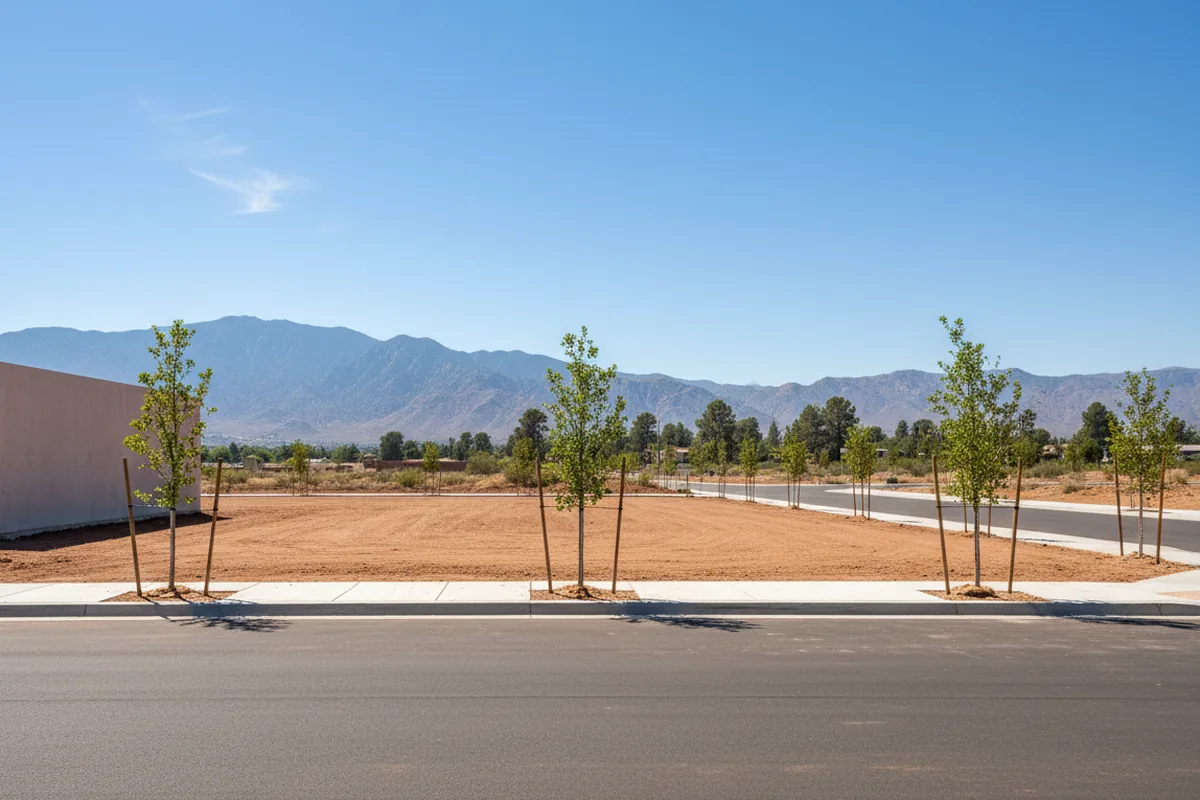
A graded lot with curbs and young trees, commercial land ready for a buyer.
Immediate answer

How general plan and zoning consistency, a certificate of compliance, the Health and Safety Code 78700 notice and a Phase I review shape a California commercial land sale.

On this page
  1. What It Means for Owners of Commercial Land
  2. The General Plan and Zoning: What Buyers Check First
  3. Legal Parcel Status and the Subdivision Map Act
  4. Hazardous Substance Notice Before a Sale
  5. Environmental Due Diligence: What the Phase I Process Involves
  6. Options and Trade-offs When Selling Commercial Land
  7. Common Mistakes Sellers Make
  8. What to Do Next
  9. Frequently asked questions
  10. Sources

Selling California land zoned for commercial or industrial use turns on four things a buyer checks: whether the parcel's zoning fits the county's or city's general plan, whether the parcel was legally created under the Subdivision Map Act, whether the owner knows of a hazardous substance release that must be disclosed, and what an environmental records review turns up.

An owner of a commercial or industrial lot in California who is getting ready to sell is often holding a parcel that has sat unused for years. It might have a zoning code few people can read, an old survey, and some uncertainty about what earlier occupants left behind. The questions come before any listing does. What will a builder or investor look at first? Which records matter? What does the owner have to tell a buyer? This page walks through each of those questions in plain terms, using the California statutes and official pages that govern them.

What It Means for Owners of Commercial Land

Commercial land is land that local zoning allows to be used for business, such as shops, offices or services. Industrial land is land zoned for uses like manufacturing, warehousing or processing. On a sale, the difference from a home lot is that the buyer is mostly paying for what can be built and run on the parcel, not for a structure already there.

That is why the records matter so much. The buyers who look at commercial land include developers, who study what can be approved and built; investors, who weigh holding risk and resale; and owner-users, who ask whether the site fits their own business. Each group reads the same parcel differently, but all of them start from the same public paperwork. For the owner, the practical meaning is that the strength of a sale depends less on the dirt itself and more on how cleanly those records line up.

The General Plan and Zoning: What Buyers Check First

Two public designations tell a buyer what the land can become. The first is the parcel's zoning, the local ordinance that says which uses are allowed. The second is its land-use designation in the general plan, the long-range plan for the county or city.

Government Code section 65300 sets the base: "Each planning agency shall prepare and the legislative body of each county and city shall adopt a comprehensive, long-term general plan for the physical development of the county or city," including land outside its boundaries that the planning agency judges relates to its planning. Every California parcel therefore sits under a general plan adopted by its county or city.

The Governor's Office of Land Use and Climate Innovation's General Plan Information page describes a general plan as "each local government's blueprint for meeting the community's long-term vision for the future." For an owner, that blueprint shows how the local government expects the area around the parcel to grow.

Government Code section 65860 then ties zoning to that plan. County or city zoning ordinances "shall be consistent with the general plan." A zoning ordinance is consistent only if both conditions are met: the city or county has officially adopted a plan, and the land uses the ordinance allows are compatible with the plan's objectives, policies, general land uses and programs. When an amendment to the general plan makes zoning inconsistent, the statute says the zoning ordinance "shall be amended within a reasonable time" so that it is consistent again. The statute also lets a resident or property owner bring an action in superior court to enforce compliance, subject to the conditions it sets.

In plain terms, consistency means the zoning map and the general plan point the same way. If they do not align, a buyer will flag it, because it raises questions about what can be approved on the site. The general plan is a public document, and an owner can usually locate it, along with the zoning map, through the county or city planning department.

A legal parcel is one created in compliance with the Subdivision Map Act and local ordinances under it, so that it can be sold, leased or financed as its own unit. Old deeds sometimes split land in ways that never met those rules, and a buyer, or a buyer's lender, will check parcel status before closing.

Government Code section 66499.35 gives the owner a way to get an answer. Any person owning real property, or a buyer under a contract of sale, "may request, and a local agency shall determine, whether the real property complies" with the Subdivision Map Act and local ordinances enacted under it. If the agency finds that the property complies, the city or county records a certificate of compliance with the county recorder. The agency may charge a reasonable fee to cover the cost of issuing and recording it.

If the agency finds the property does not comply, it issues a conditional certificate of compliance. That certificate may carry conditions, generally those that would have applied when the applicant acquired the property, with a stricter rule for an owner who created the illegal parcel by grant and still owns it. The conditions do not have to be met until a permit or other approval for development is issued. Under the same section, a recorded final map, parcel map or official map, or an approved certificate of exception, already counts as a certificate of compliance for the parcels it describes.

Each certificate must carry a notice that the parcel "may be sold, leased, or financed without further compliance with the Subdivision Map Act," while development "may require issuance of a permit or permits." For a seller, this means legal status can be settled with the local agency before a buyer ever asks.

Hazardous Substance Notice Before a Sale

Health and Safety Code section 78700 places a specific duty on owners of nonresidential property, which includes commercial and industrial land. A hazardous substance release means a hazardous material that has escaped or been spilled and come to rest in the soil or groundwater.

Under the statute, "Any owner of nonresidential real property who knows, or has reasonable cause to believe, that any release of hazardous substance has come to be located on or beneath that real property shall, prior to the sale, lease, or rental of the real property by that owner, give written notice of that condition to the buyer, lessee, or renter of the real property."

Put simply, the notice is written, it goes to the buyer, and it comes before the sale. An owner who fails to give it when required is subject to actual damages and any other remedies provided by law. Where the owner has actual knowledge of a release of a material amount of a hazardous substance and knowingly and willfully fails to give the notice, the owner is liable for a civil penalty not to exceed five thousand dollars ($5,000) for each separate violation.

This notice differs from environmental due diligence. The notice is triggered by what the owner knows or has reasonable cause to believe. Due diligence is the buyer's own investigation, whatever the owner knows. For an owner with old tank records, a past spill report or a tenant's cleanup file, those papers bear directly on whether this notice is owed, and an attorney can review how the statute applies to them.

Environmental Due Diligence: What the Phase I Process Involves

A Phase I Environmental Site Assessment is a records review and site inspection, usually commissioned by a buyer, that looks for signs a property may be contaminated. The EPA's Brownfields All Appropriate Inquiries page describes the federal liability framework behind it. Under federal cleanup law, "persons may be held strictly liable for cleaning up hazardous substances at properties that they either currently own or operate, or owned or operated in the past," based solely on ownership.

All Appropriate Inquiries, which EPA calls AAI, "is the process of evaluating a property's environmental conditions and assessing potential liability for any contamination." EPA's page says the ASTM E1527-21 standard, and E2247-23 for forestland or rural property, can be used to meet the AAI requirements. It also says AAI must be conducted or updated in the year before the date the property is acquired.

According to that page, a Phase I report may cover information the buyer supplies, a records review, a site reconnaissance of the property and adjoining land, interviews with current and past owners and occupants, and findings. The report must include the environmental professional's opinion on whether conditions indicate a release or threatened release. If that professional has an opinion on additional investigation to detect contamination, that opinion must also be in the report.

One record source is California's Cortese List. The Department of Toxic Substances Control's Cortese List page describes it as a planning document that provides "information about the location of hazardous materials release sites," with DTSC's part drawn from its EnviroStor database. For a seller, locating any prior Phase I report and checking the list ahead of time means fewer surprises when a buyer's review begins.

Options and Trade-offs When Selling Commercial Land

The paths for selling commercial land each trade something for something else.

Listing with a commercial real estate agent. The parcel reaches more buyers on the open market, and the agent handles marketing and negotiation. In return, the owner pays a commission, prepares records for review, and waits through buyer due diligence and financing.

Selling directly to a developer, investor or buyer who pays cash. A direct offer is often lower than what the parcel might bring on the open market, because that buyer takes on the entitlement risk, the carrying costs and the cost of reselling or building. What the seller gets in exchange is less preparation, fewer showings and contingencies, and less dependence on a buyer's loan.

Auction. An auction can bring several bidders to a fixed date. The owner gives up some control over the final price and the terms.

Selling without an agent. The owner keeps the commission but takes on marketing, negotiation and contract work, usually with an attorney reviewing the documents.

On every path the owner's duties stay the same. The written notice under Health and Safety Code section 78700 is owed whoever the buyer is, and the parcel's legal status and zoning are what they are. Comparing written offers and estimated net proceeds, meaning the price less commissions, carrying costs, loan payoffs and closing costs, is how an owner tells which path fits the parcel and the owner's goals.

Common Mistakes Sellers Make

Most problems in a commercial land sale are not new facts; they are known facts that surface at the wrong moment, during a buyer's review rather than before it.

A zoning mismatch the owner never looked for. An owner who has not compared the zoning designation with the general plan under Government Code section 65300 and Government Code section 65860 may learn of a conflict from the buyer instead.

An old lot no one confirmed. A lot created by an old deed may never have met the Subdivision Map Act. The certificate process under Government Code section 66499.35 exists so this question can be answered before a contract is signed.

A missing notice. Where an owner knows of, or has reasonable cause to believe in, a hazardous substance release, the written notice under Health and Safety Code section 78700 comes before the sale. Leaving it out exposes the owner to the remedies that section describes.

Environmental records left in a drawer. A prior Phase I report or a Cortese List entry that the owner never located can stall a deal late in escrow.

One sale package for every buyer. A developer studies entitlements and density, an investor looks at holding risk and resale, and an owner-user asks whether the site fits a business. A package written for one may leave the others with questions.

Each of these is easier to handle early, when the owner still controls how the information is presented.

What to Do Next

The answer for any one parcel depends on its facts and the law that applies to it: the county or city where it sits, how title is held, how the lot was created, what has been stored or spilled on it, and what any lease or contract says. For that reason, an owner's first records tend to be the same three: the parcel's general plan designation and zoning classification from the county or city planning department, any certificate of compliance or recorded map covering the lot, and any prior Phase I Environmental Site Assessment along with a check of the Cortese List.

A common next step is to pull those records together and see whether they tell one consistent story, raising any gap with the planning department or an attorney. Other questions a buyer may raise, such as title, transfer costs or broader environmental review, fall outside this page and are typically handled with a title company, an attorney or the local agency. An owner can also request a land sale options consultation through the Silver Lining Land Buyers form.

Seller questionnaire

Curious what your options are? Start with six short questions.

Answer six short questions about your land — type, acreage, location, access, timeline — to explore your selling options.

Seller guides

  1. Understand value

    Access, water, soils, zoning and entitlements shape what buyers will pay.

  2. Match the right buyer

    A ranch buyer and a homebuilder value the same acres differently.

  3. Local context

    County rules matter. See our California and San Diego County guides.

Explore Selling Options
What type of land are you selling?
Approximately how many acres?

Where is the property?

How is the property accessed?
Utilities available (select all that apply)
When would you like to sell?

How can we reach you?

See our Privacy Policy and Terms.

Testimonials

The parcel had access questions and no utilities. I appreciated an offer that accounted for that.

M.K., Minneapolis, MN

Explore your selling options

Answer a few questions about your parcel.

Start the questionnaire

Frequently asked questions

How quickly can you sell commercial land in California?

There is no single answer, because time to close tracks the parcel's complexity. A lot with consistent zoning, a recorded map and clean environmental records gives a buyer less to investigate. An unresolved parcel-status question, a possible release or a buyer's financing and due diligence conditions can each add steps before closing.

How much is commercial land per acre in California?

No statewide figure applies. Value follows location, zoning, general plan consistency, access, frontage, utilities, entitlement status and environmental condition, and two parcels in one county can differ sharply. An appraiser gives a value opinion for a specific parcel.

How do you avoid capital gains tax on the sale of commercial property?

Whether tax is owed, and how much, depends on how long the land was held, how it was used and the owner's wider tax picture. A 1031 exchange, which reinvests sale proceeds into other property, is one approach owners sometimes discuss. A CPA, an enrolled agent or a tax attorney reviews how the rules apply to a particular sale.

What disclosures does a seller owe on vacant commercial land in California?

One duty is the written notice of a known or suspected hazardous substance release under Health and Safety Code section 78700, owed before the sale. Other disclosure duties can apply depending on the parcel's history, location and condition. An attorney can review the full set for a specific sale.

What is a Phase I Environmental Site Assessment and why does it matter to a commercial land sale?

It is an environmental professional's review of records, the site, interviews and findings, ending in an opinion on signs of contamination. Buyers commission one because federal cleanup liability can follow ownership. A seller who already holds an older report knows what a buyer's new one is likely to examine.

What does zoning consistency with the general plan mean for a seller?

It means the uses the zoning allows match what the general plan intends for the area. When they match, a buyer has a clearer picture of what can be approved. When they diverge, the buyer may ask for more time, ask for conditions, or factor the uncertainty into the price.

What is a certificate of compliance and when does a seller need one?

It is a recorded document stating that a parcel's division complies with the Subdivision Map Act and local ordinances. A seller may not need a new one if a recorded final map, parcel map or official map already covers the lot. Where a lot's origin is unclear, a buyer or lender will often ask for one.