Skip to content

California

Selling California Desert Land

Updated November 21, 2026

Explore Selling Options
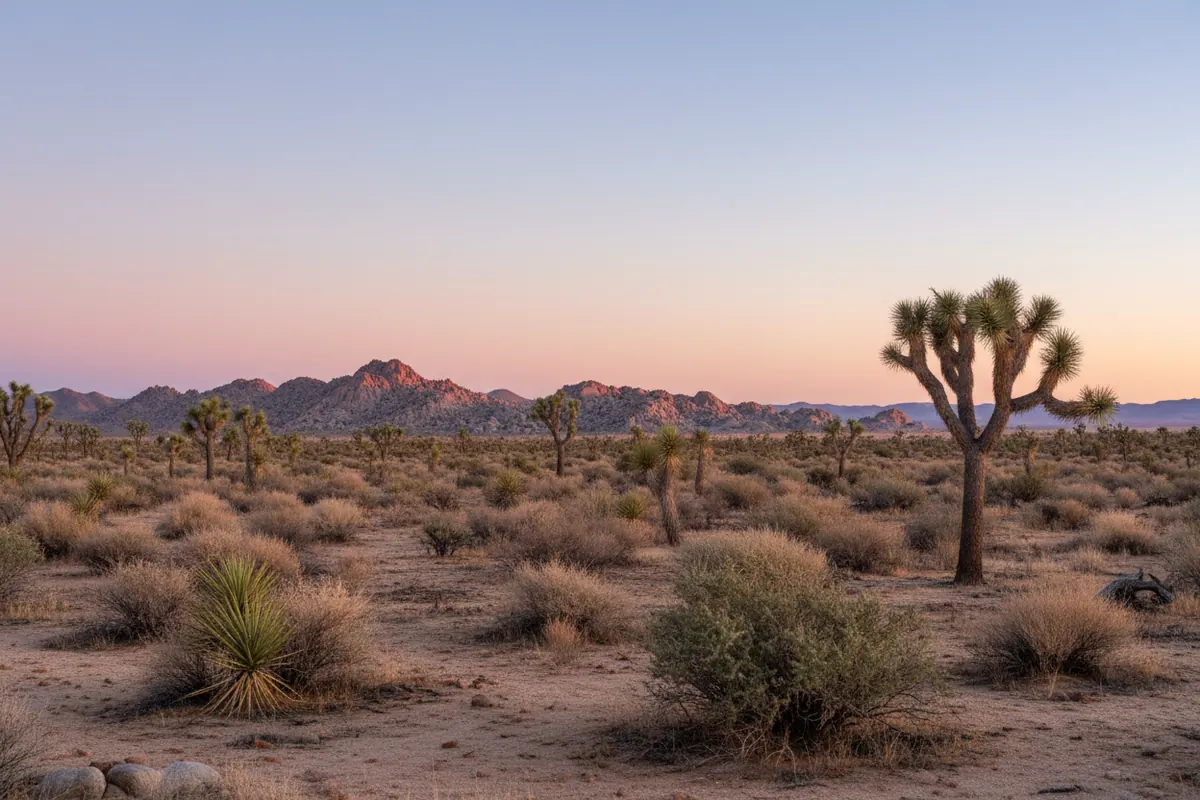
Creosote and Joshua trees on a broad Mojave flat at sunrise, open desert acreage.
Immediate answer

Selling desert land in California: the pre-1972 parcel presumption, certificates of compliance, easements that pass with a sale, wells, water rights and DRECP.

On this page
  1. What It Means for Owners of a Desert Parcel
  2. Who It Affects: Inherited, Long-Held and Out-of-Area Parcels
  3. Rules, Disclosures and Fine Print on Parcel Status, Access and Water
  4. Desert Renewable Energy Areas and What They Mean for a Parcel
  5. Options and Trade-offs When Selling Desert Land
  6. Mistakes to Avoid With an Old or Remote Desert Parcel
  7. What to Do Next: Records That Answer a Buyer's Questions
  8. Frequently asked questions
  9. Sources

Selling California desert land usually comes down to four questions a buyer will ask about the parcel. Was it lawfully created as a separate parcel? Is there recorded legal access to it? Is there water, through a well or a water right? What can it be used for? The owner's records and the county's records answer most of them.

An owner in this position may hold a remote lot in the Mojave Desert or the Colorado Desert. The lot may have been inherited, held for decades, or bought sight unseen from an old subdivision map. The owner may live hours away, and the paperwork may be thin. Before choosing how to sell, that owner needs to know what makes a desert parcel different and which questions will come up first. This page from Silver Lining Land Buyers, a California website for owners selling land, explains those differences. It covers parcel status, easements, water and the state's desert renewable energy plan, and then compares the main ways to sell.

What It Means for Owners of a Desert Parcel

A desert parcel is judged by its facts more than its scenery. Much of California's desert lies in San Bernardino, Riverside, Imperial, Kern and Inyo counties. Large blocks there were divided on paper in the mid-twentieth century, long before roads, power or water reached many of the lots. These "paper subdivisions" were lots drawn on a recorded map that were never built out. Some of them still have no paved access and no utilities.

Private lots in these areas often sit beside or among federal land managed by the U.S. Bureau of Land Management (BLM). That matters for access, because a road across public or neighboring land is not the same thing as a recorded right to use it.

Value follows the facts in words, not numbers. Lawful parcel status, recorded access, a source of water, the county's zoning, and nearby uses such as renewable energy or recreation all shape what a buyer will pay. A buyer checks each one.

Who It Affects: Inherited, Long-Held and Out-of-Area Parcels

This subject touches three kinds of owners most directly. The first is an heir who received a desert lot through an estate and has never seen it. The second is a long-time owner who bought decades ago and kept paying the property tax. The third is an out-of-area owner who cannot easily visit the county offices or walk the land.

Each of them faces the same buyer questions with less local knowledge. Who holds title, and who must sign the deed, depends on how title is recorded and, for an inherited parcel, on the estate's documents. An attorney or a title company can read those documents and say who has the authority to sell.

Buyers differ as well. Some want a recreational or off-grid lot. Some look at land near areas identified for solar, wind or geothermal energy. Others want to hold the land. Each kind of buyer weighs access, water and permitted use differently.

Rules, Disclosures and Fine Print on Parcel Status, Access and Water

The rules below set the threshold questions. Whether and how each one applies depends on the parcel's history, its recorded documents and the law that governs those facts.

Old parcels and the pre-1972 presumption

Government Code section 66412.6 sets out two cases in which a parcel created before March 4, 1972, "shall be conclusively presumed to have been lawfully created." In the first case, the parcel resulted from a division into fewer than five parcels, and at the time no local ordinance regulated divisions creating fewer than five parcels. In the second case, a later purchaser acquired the parcel for valuable consideration without actual or constructive knowledge of a violation. In plain words, an old lot can be treated as lawful, but only when its history fits one of those cases.

The second case carries a condition. Owners of parcels affected by it "shall be required to obtain a certificate of compliance or a conditional certificate of compliance" before obtaining a permit or other approval for development. For that compliance determination, the presumption "shall not be operative." For an owner, this means the presumption helps with the parcel's status but does not replace the county's review once someone wants to build.

The certificate of compliance

Picture a buyer who likes a desert lot but wants proof that it is a real, separate parcel. The certificate of compliance is the document built for that moment. Government Code section 66499.35 lets an owner, or a buyer under a contract of sale, ask the local agency to decide whether the property complies with the Subdivision Map Act, California's law on how land may be divided, and with local ordinances.

The answer comes back one of two ways. If the property complies, the city or county records a certificate of compliance with the county recorder. If it does not, the agency issues a conditional certificate instead, and those conditions must be met before a later development permit is issued. Either way, the result ends up on the public record, and the agency may charge a reasonable fee for issuing and recording it.

An owner may already have the equivalent without knowing it. The statute treats a recorded final map, parcel map, official map or approved certificate of exception as a certificate of compliance for the parcels it describes. Each certificate also carries a notice that the parcel "may be sold, leased, or financed without further compliance" with the Act, while development may still require permits. In practice, a recorded certificate or map lets an owner answer a buyer's first question with a document rather than an explanation.

Easements that pass with the land

Access is often the question that stalls a desert sale, and the easement rule explains why. Civil Code section 1104 provides that "a transfer of real property passes all easements attached thereto." An easement is a right to use someone else's land for a set purpose, such as a road. When an easement is "attached" to a parcel, it belongs to the land itself rather than to the owner personally, so a buyer receives it along with the lot.

The same section reaches one more situation. Where the seller owns other land that was "obviously and permanently used" for the parcel's benefit when the transfer was agreed upon or completed, the transfer creates an easement over that other land. For an owner, the takeaway is that the right to reach the parcel, not the dirt track a neighbor has driven for years, is what a buyer is looking for, and the buyer will check the records to find it.

Wells and water rights

The State Water Resources Control Board's Water Rights FAQs say that taking water from a stream or from underground supplies for a beneficial use requires a water right. The same page says a person may hold a riparian or pre-1914 right without a state permit. To get a right to groundwater, it says, a person "simply extract[s] the water and use[s] it for a beneficial purpose," with an exception for subterranean streams. It adds that local entities may regulate pumping. Riparian, prescriptive and pre-1914 rights, the page says, "can only be confirmed by the courts." It also notes that water rights are generally not looked up by Assessor's Parcel Number (APN), the county's number for the parcel.

For domestic wells, the Board's GAMA - Domestic Well Owners page says it is "the responsibility of the well owner to ensure that their domestic well water is safe." It points to a guide, testing information and online groundwater tools. It refers well drilling records, called well completion reports, to the Department of Water Resources. For an owner, this means the water question is answered with records and testing, not with assurances. A water right attorney or consultant can look into a specific claim.

Disclosures

Any disclosure duties a seller owes depend on the property and the sale. An attorney or a real estate agent can say which disclosures apply to a particular parcel.

Desert Renewable Energy Areas and What They Mean for a Parcel

The Desert Renewable Energy Conservation Plan (DRECP) page, published by the California Energy Commission, describes the Mojave and Colorado/Sonoran Desert area of southeastern California as covering "roughly 22.6 million acres." The plan was developed by the Commission, the California Department of Fish and Wildlife, BLM and the U.S. Fish and Wildlife Service. The page says the plan "identifies areas in the desert appropriate for the utility-scale development of wind, solar, and geothermal energy projects." It also says the plan provides for the long-term conservation of covered species, recreational areas and scenic values. The page adds that BLM approved the DRECP Land Use Plan Amendment in 2016 for the 10 million acres of BLM-managed lands in the plan area.

The plan therefore does two different things, and a private owner may sit near either kind of area. Land the plan identifies as appropriate for wind, solar or geothermal projects can draw the attention of buyers who think about energy development nearby. Land set aside for conservation, recreation or scenic values can draw a different kind of buyer, such as someone looking for an off-grid or recreational lot next to open land. In both cases, the plan shapes who may be interested in a parcel and what that buyer has in mind, rather than setting the parcel's own rules.

What a private parcel may actually be used for still comes from the county's zoning, its general plan and its permits. A buyer interested because of a nearby energy or conservation area will usually still ask the same four questions about status, access, water and permitted use.

Options and Trade-offs When Selling Desert Land

The main ways to sell a desert parcel each trade one thing for another.

  • Listing with a real estate agent who handles vacant land. This approach can reach a wider pool of buyers. It costs a commission. The timing turns on a buyer's due diligence and any loan.
  • Selling directly to a buyer who pays cash and takes the parcel as it is. A direct offer is often lower than an open-market price. The buyer takes on the unanswered questions about status, access and water, the cost of any improvements, and the cost of reselling. In exchange, the seller usually does less preparation and depends less on a buyer's loan. The seller's legal duties stay the same whoever the buyer is.
  • Selling without an agent. The owner keeps the commission but handles the marketing, the buyer's questions and the negotiation. For a remote parcel, the pool of buyers may be narrow.

An owner can tell which approach fits by comparing written offers side by side. The useful comparison is estimated net proceeds: the price less commissions, carrying costs, any loan payoff and closing costs. A CPA, an enrolled agent or a tax attorney can review the tax side of a sale.

Mistakes to Avoid With an Old or Remote Desert Parcel

Three mistakes come up often with desert parcels, each tied to a rule covered above.

  • Treating a track on the ground as legal access. Buyers look for a recorded right, as the easement section explains.
  • Assuming the pre-1972 presumption settles everything. It fits only the statute's two cases, and building may still call for a certificate of compliance.
  • Describing water that is not documented. Claims about a well or a water right without records invite disputes, especially since some rights can be confirmed only by a court.

A contested question about title, a boundary or access is a separate matter for an attorney.

What to Do Next: Records That Answer a Buyer's Questions

For an out-of-area owner, the practical next step on this subject is gathering the records a buyer's due diligence will reach for:

  • the county assessor's parcel map and the APN
  • the recorded deed, with any reservations or easements it mentions
  • any recorded access or utility easements and road agreements
  • any recorded certificate of compliance or subdivision map
  • any well completion report from the Department of Water Resources
  • the county's zoning and general plan designation for the parcel

Having these in hand turns most of a buyer's first questions into answers already on paper.

Seller questionnaire

Curious what your options are? Start with six short questions.

Answer six short questions about your land — type, acreage, location, access, timeline — to explore your selling options.

Seller guides

  1. Understand value

    Access, water, soils, zoning and entitlements shape what buyers will pay.

  2. Match the right buyer

    A ranch buyer and a homebuilder value the same acres differently.

  3. Local context

    County rules matter. See our California and San Diego County guides.

Explore Selling Options
What type of land are you selling?
Approximately how many acres?

Where is the property?

How is the property accessed?
Utilities available (select all that apply)
When would you like to sell?

How can we reach you?

See our Privacy Policy and Terms.

Testimonials

The parcel had access questions and no utilities. I appreciated an offer that accounted for that.

M.K., Minneapolis, MN

Explore your selling options

Answer a few questions about your parcel.

Start the questionnaire

Frequently asked questions

Does a parcel created before 1972 automatically have legal parcel status in California?

No, not in every case. The presumption covers only the two situations the statute lists, and each depends on facts in the parcel's history, such as how many lots the original division created or what a later purchaser knew. Old deeds and recorded maps usually supply those facts.

What is a certificate of compliance and when does a desert land owner need one?

It is a recorded county or city finding that the parcel's division complies with the Subdivision Map Act. It matters most before development. It can also help a sale, because its notice states that the parcel may be sold, leased or financed without further compliance with the Act.

Do easements transfer automatically when California desert land is sold?

An easement attached to the parcel passes with the transfer under Civil Code section 1104, without a separate deed for the easement. The harder question is often whether access was ever recorded in the first place. The county recorder's records show which easements exist.

How does a California desert land owner find out if there is a well on the parcel?

The Water Board's GAMA page refers well drilling records to the Department of Water Resources' Well Completion Reports site and its map application. The GAMA page also offers well testing guidance. A site visit or an older survey may show a well that was never documented.

What is the DRECP and does it affect privately owned desert land?

The DRECP is a state and federal plan that identifies desert areas suitable for renewable energy and provides for conservation. On private land, it mainly shapes a buyer's interest in a parcel. The county's zoning, general plan and permits govern what the parcel may be used for.

What records should a California desert land owner gather before selling?

The useful set covers status, access, water and use. Status comes from a map or certificate. Access comes from the deed and recorded easements. Water comes from a well report. Use comes from county zoning. An heir may also need the estate documents that show who has the authority to sign.

What are the main ways to sell vacant desert land in California?

The main paths are listing with an agent, selling directly to a cash buyer, and selling without an agent. A direct offer is often lower than an open-market price, in exchange for less preparation and less dependence on a buyer's loan. Comparing estimated net proceeds shows the differences.